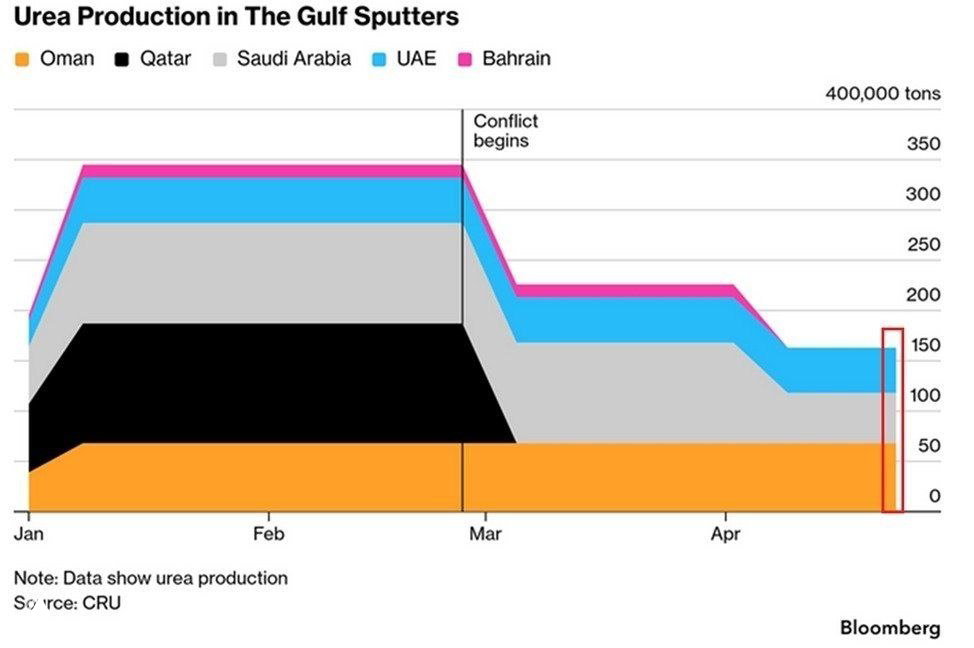
Urea production in the Persian Gulf has declined by 60% since the start of the war in Iran, falling to approximately 160,000 tons per week and reaching another low this year. Urea is the most widely used nitrogen fertilizer in the world and a key component in the cultivation of major crops, including corn, wheat, and rice.
Producers are also running out of storage capacity, increasing the risk that they may be forced to halt operations entirely. The Middle East accounts for around 45% of global urea trade.
As a result, fertilizer prices are likely to rise, putting pressure on agricultural production and potentially leading to higher global food prices.