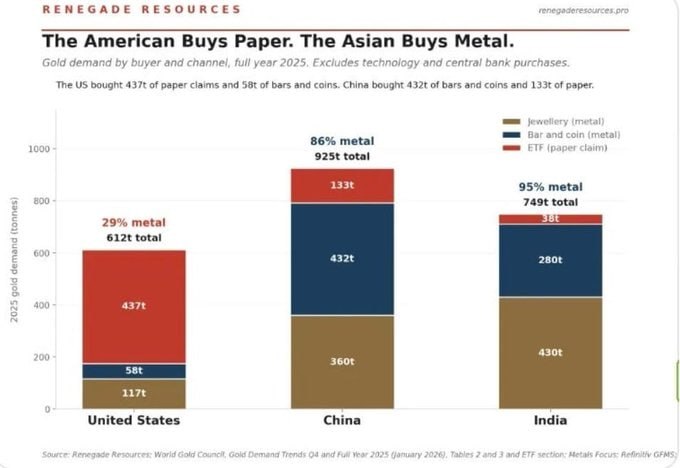
This chart highlights a striking divergence in how the world’s largest gold markets gained exposure to the metal in 2025.
- 🇺🇸 United States: 612 tonnes of demand, but only 29% in physical metal. The largest component — 437 tonnes — came through ETFs and other paper claims.
- 🇨🇳 China: 925 tonnes of demand, with approximately 86% in physical gold, primarily jewellery, bars and coins.
- 🇮🇳 India: 749 tonnes of demand, of which around 95% was physical metal.
The distinction matters. Western investors often treat gold primarily as a financial asset — something that can be traded efficiently through ETFs and securities. In China and India, gold continues to be accumulated overwhelmingly as a tangible store of wealth.
Investment conclusion
For long-term investors, the key message is not simply that demand for gold remains strong, but where that demand is coming from and in what form.
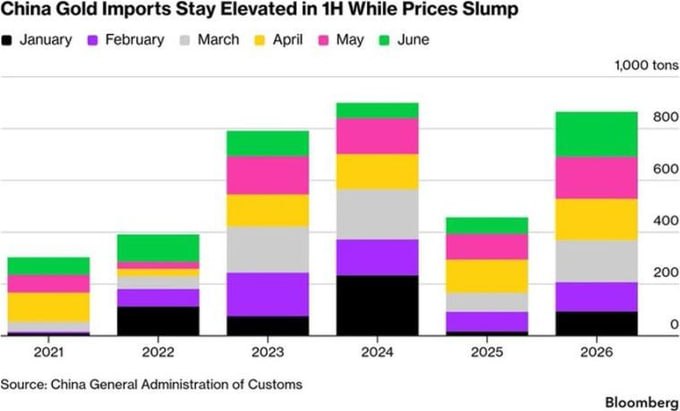
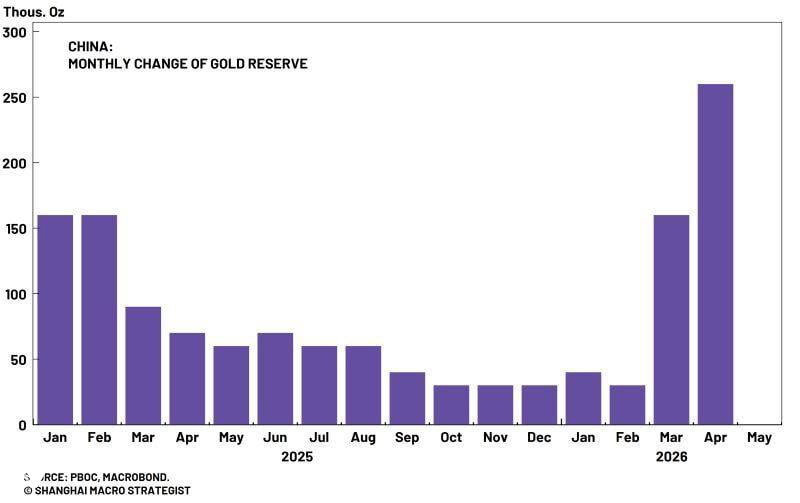
Persistent physical accumulation in Asia can provide an important structural foundation for the gold market, particularly at a time of geopolitical fragmentation, concerns over currency debasement and growing demand for assets outside the traditional financial system.
The gold deserves to remain a strategic component of a diversified portfolio — not merely as a short-term trade, but as a long-term monetary and real-asset allocation.